
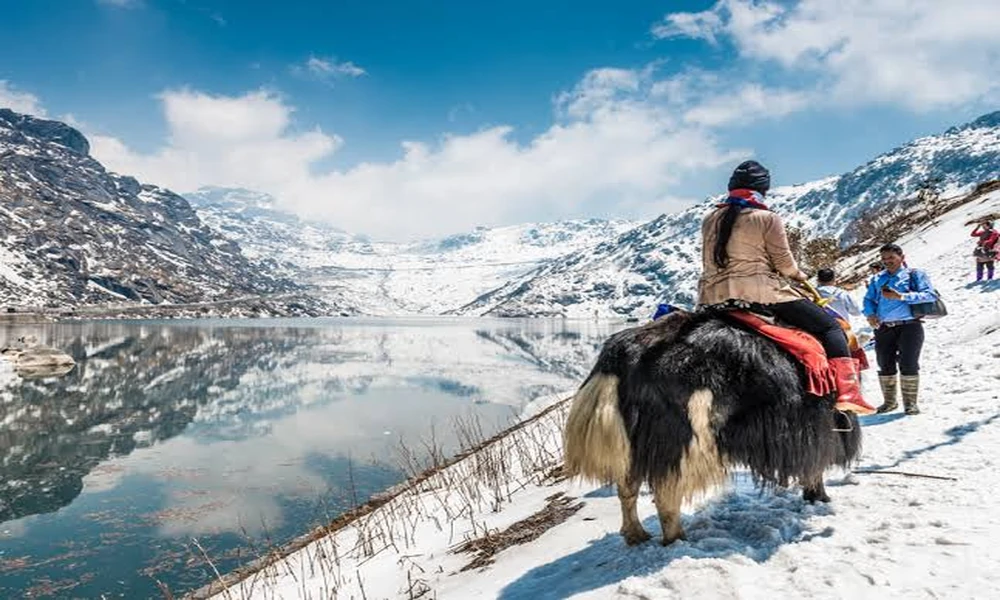
Nature in Sikkim runs from subtropical river gorges to alpine lakes above 5,000 m within one small state. The headline is Khangchendzonga National Park, India’s only mixed UNESCO World Heritage Site. Add rhododendron sanctuaries, red pandas and valleys full of flowers, and the best months are spring and autumn.
What makes nature in Sikkim special?
Few places pack this much range into so little ground. In a day you can climb from warm Teesta river gorges to alpine meadow, and the wildlife list reads like a Himalayan who’s who: the red panda, Sikkim’s state animal, the blood pheasant, its state bird, and higher up the snow leopard. The state flower is the Noble Dendrobium, one of more than 500 orchid species recorded here.
Sikkim also protects this well. It became India’s first fully organic state in 2016 and enforces strict limits on plastic, so the trails and valleys stay noticeably clean. That care is part of what you come for.
Khangchendzonga National Park, the centrepiece
Khangchendzonga National Park is the heart of nature in Sikkim and India’s only mixed UNESCO World Heritage Site, listed in 2016 for both its wild and its sacred value. It covers about 1,784 sq km and rises to the Khangchendzonga (Kanchenjunga) summit at 8,586 m, the world’s third-highest mountain. Inside live snow leopard, red panda, Himalayan tahr, musk deer and more than 500 bird species.
You see it mainly on foot. The classic routes are the Goecha La trek, seven to nine days over roughly 90 km, and the shorter Dzongri trek of five to six days, both from Yuksom (Yuksam). Spring, March to May, and autumn, October to early December, are the trekking windows. Every trek needs a Forest Department permit and a registered operator; a casual walk-in is not possible.
Where can you see rhododendrons and flowers?
Spring is flower season, and Sikkim times beautifully. Barsey (Varsey) Rhododendron Sanctuary in the west turns colour in April and May, with per-day permits issued at Hilley village. In the north, the Shingba Rhododendron Sanctuary carpets the Yumthang valley, often called the Valley of Flowers, and holds the state tree, Rhododendron niveum.
Closer to Gangtok, the Kyongnosla Alpine Sanctuary on the Tsomgo road shelters rare ground orchids and rhododendrons. If flowers are your reason to come, aim for late April into May; the rhododendron window is short and easy to miss by a fortnight.
Where can you see wildlife?
For a real chance at a red panda, Fambong Lho Wildlife Sanctuary, about 20 km from Gangtok, is the easiest base, with barking deer and plenty of birds alongside. Maenam Wildlife Sanctuary near Ravangla, topping out around 3,230 m, adds leopard, civet and a strong birding list, and Kitam Bird Sanctuary in the south is the go-to for birders.
Set expectations, though. Red panda and snow leopard sightings are rare and never guaranteed; patient early mornings with a local guide give you the best odds, and the forest itself, mossy and loud with birds, is the reward whether or not the headline animal shows.
Beyond the parks: scenic Sikkim
Some of the best scenery sits outside the reserves. Tsomgo (Changu) Lake at about 3,753 m and Gurudongmar at 5,430 m are glacial lakes reachable by road with permits. Yumthang pairs alpine meadow with a hot spring, and the Teesta and Rangit rivers carve green gorges that carry rafting when the water is right.
| Season | What is at its best |
|---|---|
| Spring (Mar to May) | Rhododendrons, orchids, clear trekking |
| Summer monsoon (Jun to Sep) | Lush forest, but leeches, landslide risk, poor views |
| Autumn (Oct to early Dec) | Sharpest mountain views, best all-round nature season |
| Winter (Dec to Feb) | Snow at altitude, many high spots and parks closed |
Do I need permits for Sikkim’s nature spots?
Yes. Every national park and wildlife sanctuary needs prior Forest Department permission, and the trekking routes inside Khangchendzonga National Park also need a registered operator. The high lakes and passes sit in restricted areas: Indian citizens need a Protected Area Permit, arranged through a registered Sikkim agent for North Sikkim and the east passes, while foreign nationals need an entry permit and are barred from Gurudongmar, Zero Point and Nathu La. Park and sanctuary entry fees apply and change from time to time.
Dos and don’ts for a nature trip
Do:
- Time rhododendrons for late April and May, and come in autumn for the clearest views.
- Book Khangchendzonga treks through a registered operator well ahead; permits are not issued to walk-ins.
- Hire a local naturalist guide for the sanctuaries; your odds of a sighting rise sharply.
- Carry a refillable bottle and pack out your waste; Sikkim’s plastic rules are strict and enforced.
Don’t:
- Do not expect guaranteed red panda or snow leopard sightings; treat them as a bonus.
- Do not treat Goecha La as a day outing; it is a serious multi-day high-altitude trek.
- Do not arrive for flowers in June; the monsoon ends the rhododendron season and clouds the views.
- Do not assume you can arrange park permits yourself on the day; plan them with your operator.
FAQ
What is the best time to see nature in Sikkim?
Spring, from March to May, for rhododendrons, orchids and clear trekking, and autumn, October to early December, for the sharpest mountain views and the best all-round conditions. The summer monsoon brings lush forest but leeches, landslide risk and clouded peaks, while deep winter shuts many high parks and lakes.
Is Khangchendzonga National Park worth visiting?
Yes, it is the centrepiece of nature in Sikkim and India’s only mixed UNESCO World Heritage Site. You experience it mainly on multi-day treks like Goecha La or Dzongri from Yuksom, through forest, meadow and high moraine below the world’s third-highest peak. It needs a Forest Department permit and a registered trekking operator.
Where can I see a red panda in Sikkim?
Fambong Lho Wildlife Sanctuary, about 20 km from Gangtok, is the most accessible place to try, and Maenam near Ravangla is another. Sightings are never guaranteed; red pandas are shy and thinly spread. Early mornings with a patient local guide give the best chance, so build in time rather than expecting a quick tick.
When do rhododendrons bloom in Sikkim?
Mainly April and May. Barsey Rhododendron Sanctuary in the west and the Shingba sanctuary in the Yumthang valley are the standout spots, with high meadows turning red, pink and white. The window is short, so aim for late April into May; arrive in June and the monsoon has usually ended the display.
Do I need a permit for national parks and sanctuaries in Sikkim?
Yes. Every park and wildlife sanctuary needs prior Forest Department permission, and treks inside Khangchendzonga National Park also require a registered operator. High lakes and passes add a Protected Area Permit for Indians, arranged through an agent, while foreign nationals need an entry permit and are barred from some border areas.
Is Sikkim good for wildlife and birdwatching?
Very. Sikkim records more than 500 bird species and protects red panda, snow leopard, musk deer and Himalayan tahr across its parks. Kitam Bird Sanctuary suits birders, Fambong Lho and Maenam offer mammals and birds together, and the altitude range means you cross several habitats in a short distance. A local guide greatly improves what you see.
To know more information about nature and scenic tourism in Sikkim, check out sikkimtourism.org
