
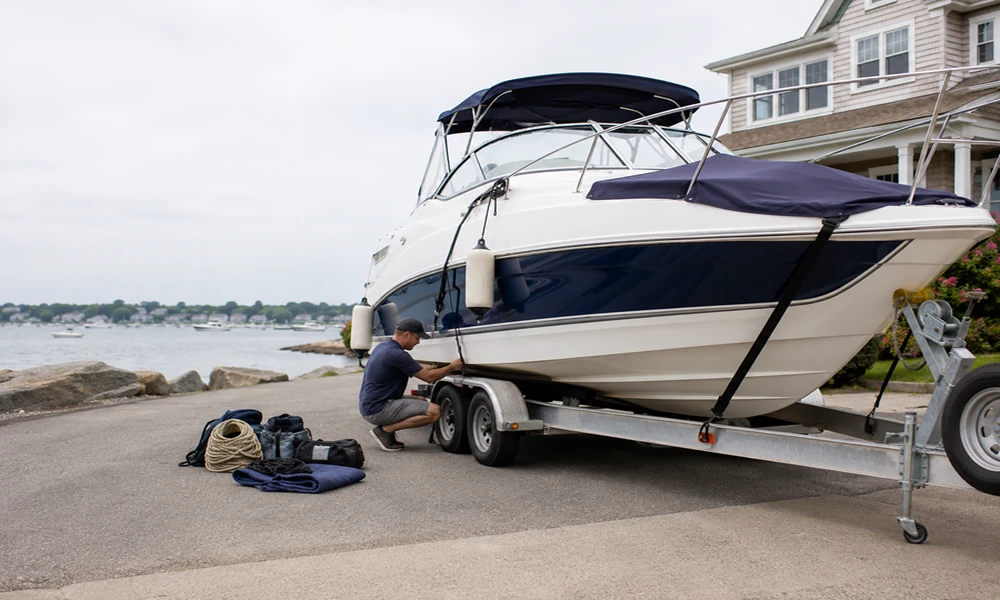
Moving a boat overland involves more than choosing a pickup date and waiting for a truck to arrive. Good preparation helps everyone involved understand the vessel, the pickup location, the delivery requirements, and any details that need attention before transport begins.
Whether a boat is moving between marinas, heading to a new owner, going into storage, or relocating across state lines, several decisions are easier to address before pickup day. The following checklist can help owners organize the process and reduce avoidable surprises.
Document the Boat Before Preparing It for Pickup
Start by recording the boat’s condition before transport.
Take clear photographs from multiple angles, including the hull, bow, stern, topsides, windshield or enclosure, engines, and any areas that already have visible marks or damage. Photographing the vessel before preparation also creates a useful reference when checking its condition after delivery.
This is also a good time to review the boat for loose, removable, or vulnerable items. Equipment that is secure during normal boating conditions may not necessarily be intended to remain exposed during highway transportation.
Owners should identify items such as removable cushions, covers, electronics, antennas, canvas components, accessories, and personal belongings and determine what should be removed or secured before pickup.
The objective is not simply to make the boat look tidy. It is to understand its condition and configuration before transportation begins.
Confirm Measurements and Pickup Details Early
Accurate information about the vessel is essential during transport planning.
Length may be the first measurement an owner thinks about, but width, height, hull configuration, and installed equipment can also affect how a boat is prepared and transported. Towers, arches, antennas, radar equipment, hardtops, and other components may need to be considered when establishing the boat’s transport dimensions.
Owners should avoid relying solely on assumptions or an old specification sheet when the boat has been modified since it was built. Confirming current measurements before scheduling gives the people coordinating the move better information to work with.
Pickup conditions matter as well.
Before the scheduled date, confirm exactly where the boat will be collected and whether the carrier can reasonably access that location. If a marina, storage facility, boatyard, dealership, or private seller is involved, establish who will be available and what arrangements are needed for release of the vessel.
The same exercise should be completed for the destination. A successful pickup solves only half of the logistical problem; someone also needs to be prepared for delivery.
Clarify Who Is Coordinating Each Part of the Move
Boat transportation often involves several parties rather than only the owner and driver. A marina may be preparing the vessel, a seller may control access at pickup, a buyer may be receiving it hundreds of miles away, and different schedules may need to align.
Before transport begins, identify who is responsible for each part of the process.
That includes confirming the vessel information, arranging pickup timing, communicating with the marina or facility, coordinating with the carrier, monitoring schedule changes, and making sure someone is prepared to receive the boat at its destination.
Owners who want professional help managing those steps can review the scope of boat transport services to understand the types of coordination that may be involved, including pre-transport preparation, carrier scheduling, pickup, marina communication, and delivery planning.
Regardless of who manages the process, responsibilities should be clear before the vessel is released. When everyone knows who is handling each step, there is less opportunity for important details to become assumptions.
Prepare for Pickup Day, Not Just the Trip
Many transport problems begin before the boat ever leaves its starting location.
Confirm the pickup date and contact information shortly before transport, particularly when a marina, seller, dealership, or storage facility will be releasing the vessel. Make sure the relevant person knows a carrier is expected and understands any access procedures.
The boat itself should also be ready when the carrier arrives.
Preparation requirements can vary depending on the vessel and how it will be transported, so owners should confirm expectations in advance rather than making last-minute decisions. Items that need to be removed, secured, lowered, disconnected, or otherwise prepared should be addressed before the scheduled pickup whenever possible.
Access is another consideration. A marina or facility that is easy to reach with a passenger vehicle may present different conditions for a truck and trailer carrying a large vessel. Sharing accurate pickup information early allows potential access questions to be identified before arrival.
Plan the Delivery Before the Boat Leaves
Owners naturally focus on getting a vessel picked up, but delivery deserves equal attention.
Confirm the exact destination, the person receiving the boat, available contact information, and any facility requirements. If the vessel is arriving at a marina, boatyard, storage facility, or service location, that facility should know about the expected delivery.
Timing should also be treated as something that requires communication rather than an assumption. Transportation involves multiple moving parts, and owners should make sure the receiving party can adapt if the arrival schedule changes.
When the vessel reaches its destination, compare its condition with the pre-transport documentation and follow the agreed delivery process before the move is considered complete.
Organizing these details before departure makes the final stage of transportation considerably easier to manage.
Conclusion
A well-prepared boat transport starts long before the vehicle pulls onto the highway.
Documenting the vessel, confirming current measurements, securing appropriate items, checking pickup and delivery access, defining responsibilities, and keeping all involved parties informed can make the process more organized from beginning to end.
The most useful preparation question is simple: what still needs to be decided before pickup day?
Answering that question early gives owners, marinas, carriers, buyers, sellers, and other participants the information they need to coordinate the move effectively-and helps prevent avoidable details from becoming last-minute problems.
